Seasonal Foraging Guide
Wild greens, berries, fruit, nuts and mushrooms month by month — where they grow, how to use them, and the look-alikes to watch for.
Best foraging near you right now
What’s in season this month and actually being found within about 50 miles of you.
Your location is rounded to about 7 miles and never saved on our site.
Sightings from iNaturalist research-grade observations. Photos © their photographers via iNaturalist, used under Creative Commons licenses.
Season calendar
| Wild food | Jan | Feb | Mar | Apr | May | Jun | Jul | Aug | Sep | Oct | Nov | Dec | |
|---|---|---|---|---|---|---|---|---|---|---|---|---|---|
| Morel mushrooms | |||||||||||||
| Chanterelles | |||||||||||||
| Chicken of the woods | |||||||||||||
| Hen of the woods (maitake) |
Typical seasons for the eastern and central United States. Farther south things come in earlier; farther north and higher up, later.
What to look for
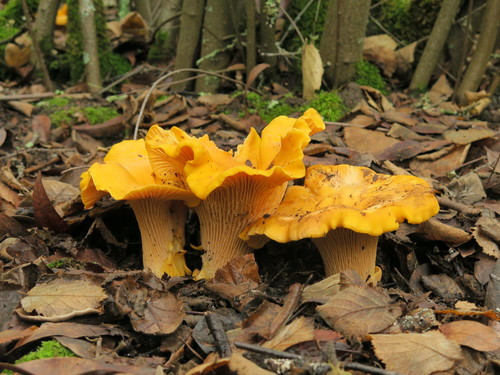
Mushrooms · June–September
Chanterelles
Cantharellus
Where: Hardwood forests (oak, beech) on the ground after summer rains.
Look-alikes & cautions: Jack-o’-lantern mushrooms are poisonous: they grow in clusters on wood and have sharp, true gills. Chanterelles grow singly from soil with blunt, forked ridges and pale, stringy flesh inside.
Use: Sauté; freeze after cooking
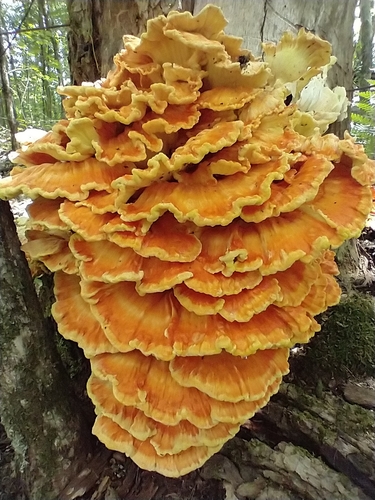
Mushrooms · June–October
Chicken of the woods
Laetiporus
Where: Bright orange-yellow shelves on living or dead oaks and other hardwoods.
Look-alikes & cautions: Cook thoroughly. Some people react, especially to ones growing on conifers, eucalyptus or locust — try a small amount first. Pick the tender outer edges.
Use: Cook like chicken; freeze after cooking
Learn With Others
The best way to learn wild foods is alongside someone who knows them. Ask for identification help in the Foraging group — post clear photos of every part of the plant or mushroom — and never eat anything on an online ID alone.